June 11th, 2026 | 07:35 CEST
AMD, American Atomics & Super Micro Computer: How to Capitalize on the Multi-Billion-Dollar AI Infrastructure Trend
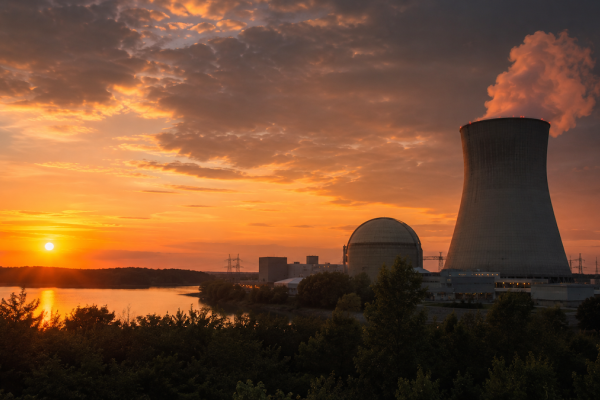
Artificial intelligence requires chips and electricity. Data centers already consume as much energy as all of Japan, and demand is surging. According to the International Energy Agency (IEA), global electricity consumption by these centers could rise to over 945 terawatt-hours in 2026. The problem is that renewable energy sources do not provide a constant base load. The solution is nuclear power. Tech giants like Google have long been relying on old nuclear reactors and mini-reactors. For investors, this creates a multi-billion-dollar infrastructure supercycle. Three companies are addressing it from different angles: AMD with high-performance AI accelerators, American Atomics with the critical uranium supply chain, and Super Micro Computer with highly efficient, liquid-cooled server technology.
time to read: 4 minutes
|
Author:
Armin Schulz
ISIN:
AMERICAN ATOMICS INC | CA0240301089 | CSE: NUKE , ADVANCED MIC.DEV. DL-_01 | US0079031078 , SUPER MICRO COMPUT.DL-_01 | US86800U1043
Table of contents:
Author

Armin Schulz
Born in Mönchengladbach, he studied business administration in the Netherlands. In the course of his studies he came into contact with the stock exchange for the first time. He has more than 25 years of experience in stock market business.
Tag cloud
Shares cloud
AMD: Benefiting from the AI transformation
While the competition is locked in a pure GPU race, the CPU is enjoying an unexpected renaissance. The reason is agent-based AI systems that independently execute tasks, call APIs, and analyze databases—and this consumes up to 80% of the latency on the processor side. As a result, AI racks are shifting their GPU-to-CPU ratio from 8:1 to 2:1 or parity. AMD delivers exactly the architecture needed with EPYC "Venice" (256 cores, 2-nanometer). The segment recently grew by over 50%, and the addressable server CPU market is expected to double to over USD 120 billion by 2030.
AMD has long since stopped selling individual chips. The Helios rack platform bundles Venice processors, MI455X accelerators, and proprietary networking technology into a complete solution. OpenAI and Meta are on board as anchor customers. With over USD 10 billion in investments in a new panel-based chip packaging solution, the company is circumventing TSMC's notorious CoWoS bottlenecks. This protects margins while others remain reliant on expensive wafer packaging. A multi-billion-dollar deal with Meta for 6 gigawatts of computing power plus a stock option also provides planning security through 2027.
The development is impressive, but there are also downsides. Inventory levels reached a five-year high with 142 days of supply, and the PC and gaming business is weakening. Rising HBM4 memory prices act as a hidden tax on AI investments. And new US export rules are complicating business in China. Management expects revenue of approximately USD 11.2 billion for the second quarter of 2026, an increase of 46%. The major surge in GPU volume will not occur until the second half of the year. The transformation is solid, but the stock is already highly valued at its current share price of USD 475.51.
American Atomics: AI Boom Exacerbates the Uranium Shortage
Electric vehicles and data centers consume electricity around the clock. Nuclear power provides this baseload, but the US supply chain has a massive gap. Domestic mines cover only a fraction of the demand; one-fifth of imported uranium recently came from Russia. The AI boom is exacerbating this. Analysts expect uranium demand to rise by nearly 30% by 2030. Whoever builds capacity here holds strategic leverage. American Atomics is addressing this very gap with two concrete projects and is receiving political tailwinds from the Defense Production Act Consortium.
In March, the company secured an option on 80% of 217 claims in the historic Lisbon Valley, Utah. Oil drilling there has revealed gamma readings many times higher than normal. This indicates a potential mirror deposit on the eastern flank, which has been underexplored to date. In April, the company completed the acquisition of the Blue Streak Mine in Colorado. The latest resource estimate from June 1 shows measured and indicated uranium resources of over 109,000 pounds at the site. In addition, there are exploration targets where a total of up to 634 million pounds of tonnage is expected at a grade of 0.12–0.32% uranium. The property also contains vanadium, which could further boost profitability.
American Atomics is not a cash flow machine at this stage. Drilling in Utah is still pending, and the Kenora option, which was terminated in early June, shows that the company is also willing to walk away from deals if they do not serve its interests. The roadmap is financed through a placement of just under CAD 2 million from March. The company is addressing a structural supply bottleneck and a lack of political will, and offers two exciting projects in historic mining districts. For investors looking to capitalize on the uranium shortage, it is worth taking a closer look. The share is currently trading at around CAD 0.265.
Super Micro Computer: From Server to AI Infrastructure Architect
Goldman Sachs analysts have significantly raised their forecast for AI servers. Instead of USD 961 billion, they now expect USD 1.24 trillion in revenue in this segment by 2030. Traditional servers are also expected to grow faster than anticipated, reaching USD 164 billion instead of USD 105 billion. This is very good news for a provider like Super Micro Computer. The market in which the company operates is becoming both larger and more complex. The demand for data centers capable of housing entire AI clusters currently exceeds supply in many places. Those who rely solely on individual components here will lose out in the long run.
The real growth potential lies not in individual servers, but in delivering entire AI factories from a single source. With its Data Center Building Block Solutions (DCBBS), Super Micro Computer aims to cover exactly that. From power supply, cooling, and networking to software, the company wants to deliver everything from a single source. The gross margin has recently recovered to 10.1%, and management expects the share of DCBBS in overall profitability to rise to over a quarter. Anyone focusing solely on unit sales today is overlooking this shift toward higher-margin services. However, the question remains whether the company can get its internal processes under control quickly enough.
The AI infrastructure boom demands computing power and baseload energy. AMD is addressing the architectural shift toward CPU-intensive agent-based systems with its EPYC platform and is securing key strategic customers early on. American Atomics is capitalizing on the tightening uranium shortage and is developing promising projects in historical mining districts such as Lisbon Valley and Blue Streak. Super Micro Computer is transitioning from a server provider into a comprehensive AI factory architect, but is still grappling with operational risks. Those looking to capitalize on this billion-dollar trend need patience during volatile market phases, yet the structural demand for efficient AI infrastructure remains unbroken.
Conflict of interest
Pursuant to §85 of the German Securities Trading Act (WpHG), we point out that Apaton Finance GmbH as well as partners, authors or employees of Apaton Finance GmbH (hereinafter referred to as "Relevant Persons") currently hold or hold shares or other financial instruments of the aforementioned companies and speculate on their price developments. In this respect, they intend to sell or acquire shares or other financial instruments of the companies (hereinafter each referred to as a "Transaction"). Transactions may thereby influence the respective price of the shares or other financial instruments of the Company.
In this respect, there is a concrete conflict of interest in the reporting on the companies.
In addition, Apaton Finance GmbH is active in the context of the preparation and publication of the reporting in paid contractual relationships.
For this reason, there is also a concrete conflict of interest.
The above information on existing conflicts of interest applies to all types and forms of publication used by Apaton Finance GmbH for publications on companies.
Risk notice
Apaton Finance GmbH offers editors, agencies and companies the opportunity to publish commentaries, interviews, summaries, news and the like on news.financial. These contents are exclusively for the information of the readers and do not represent any call to action or recommendations, neither explicitly nor implicitly they are to be understood as an assurance of possible price developments. The contents do not replace individual expert investment advice and do not constitute an offer to sell the discussed share(s) or other financial instruments, nor an invitation to buy or sell such.
The content is expressly not a financial analysis, but a journalistic or advertising text. Readers or users who make investment decisions or carry out transactions on the basis of the information provided here do so entirely at their own risk. No contractual relationship is established between Apaton Finance GmbH and its readers or the users of its offers, as our information only refers to the company and not to the investment decision of the reader or user.
The acquisition of financial instruments involves high risks, which can lead to the total loss of the invested capital. The information published by Apaton Finance GmbH and its authors is based on careful research. Nevertheless, no liability is assumed for financial losses or a content-related guarantee for the topicality, correctness, appropriateness and completeness of the content provided here. Please also note our Terms of use.